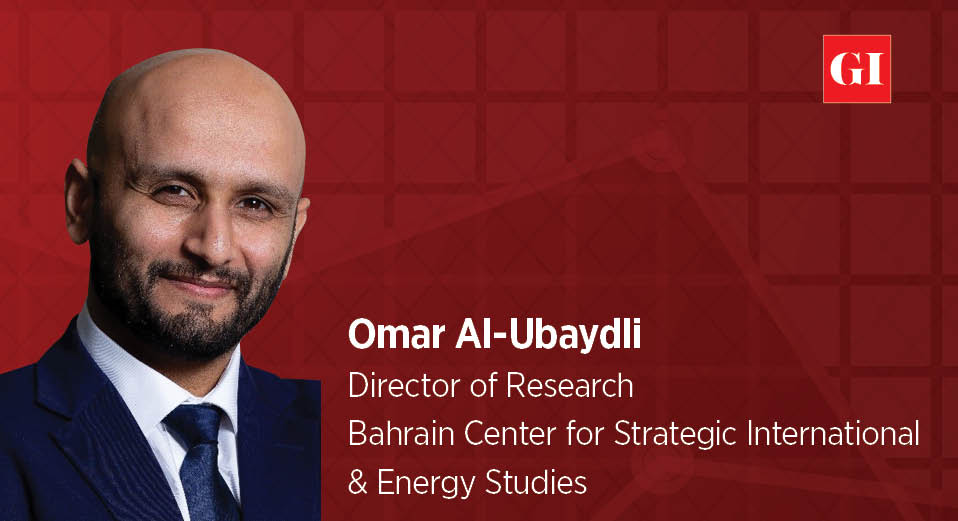
Much of the current commentary around Iran suggests that pressure has eased and the risk of escalation has diminished. I would caution strongly against that conclusion. What we are seeing is not resolution, but opacity, and opacity in geopolitics is rarely comforting.
Information coming out of Iran is extremely limited, and narratives circulating in international media are often misleading. While it may appear that the immediate risk of U.S. intervention has deflated, this pause should not be mistaken for closure. The underlying drivers of tension remain firmly in place.
Restraint Does Not Mean Resolution
Recent U.S. restraint appears to have been influenced by regional partners, particularly Gulf states, who are openly opposed to regime collapse in Iran. Their position is pragmatic rather than ideological. Economic transition across the Gulf requires stability, investment confidence, and a region open for business, not another Iraq-style shock that redirects resources toward security and reconstruction.
This restraint, however, exists in tension with another powerful regional influence: Israel. Israel’s stated security objectives regarding Iran, particularly its nuclear posture, have not been achieved. History suggests that when such objectives remain unmet, they do not quietly disappear. They resurface.
The U.S. Is Not Playing Chess
There is a temptation to over-intellectualize U.S. foreign policy decisions, to see elaborate strategy where there may be none. Sometimes, policy resembles opportunism more than grand design. Not every move is a bargaining chip; some are simply grabs for advantage. That matters for markets. It increases unpredictability.
Why This Matters for Energy Markets
From an energy perspective, Iran remains the single most consequential wildcard. Unlike Russia, whose oil flows continue under strain, or Venezuela, where pressure has been incremental, Iran’s supply has not yet faced meaningful degradation. That is precisely why it matters.
If intervention comes, it is unlikely to resemble Iraq or Afghanistan. The U.S. has demonstrated it can generate significant disruption using limited kinetic actions, drones, airstrikes, and regional partners. That model lowers the threshold for action, and raises the risk of sudden escalation. In that context, today’s calm should be treated not as reassurance, but as a warning.